🇯🇵

Best Japanese Books to Understand Japanese Culture

Discover 25 essential Japanese books that reveal the soul of Japan, from ancient court tales to modern existential fiction.

Japanese literature is one of the oldest and most refined literary traditions in the world, stretching from the courtly poetry of the Heian period to the sharp psychological fiction of the modern era. Reading Japanese authors offers an unparalleled window into concepts like mono no aware (the pathos of things), wabi-sabi (beauty in imperfection), and the delicate tension between social obligation and personal desire that shapes everyday life in Japan.

Whether you are drawn to the spare elegance of a Kawabata novel or the surreal landscapes of Murakami, each book on this list has been chosen because it illuminates a distinct facet of Japanese society. From samurai ethics and Zen aesthetics to post-war disillusionment and contemporary urban loneliness, these works will deepen your understanding of Japan far beyond what any guidebook can provide.

25 essential japanese books

Cover of The Tale of Genji

1.The Tale of Genji

Murasaki Shikibu · 1008

Often called the world's first novel, this masterpiece of Heian court life reveals the aesthetic sensibilities, romantic customs, and political intrigues of classical Japan. It introduces the foundational concept of mono no aware that still permeates Japanese art and daily life.


Cover of The Pillow Book

2.The Pillow Book

Sei Shōnagon · 1002

A witty and deeply personal collection of observations, lists, and anecdotes from a Heian-era court lady. It offers rare insight into aristocratic taste, seasonal awareness, and the sharp social hierarchies that defined classical Japanese culture.

Cover of The Narrow Road to the Deep North

3.The Narrow Road to the Deep North

Matsuo Bashō · 1702

Bashō's poetic travel journal blends haiku with prose to capture the spiritual dimension of wandering through rural Japan. It embodies the Zen-influenced aesthetic of simplicity and impermanence that remains central to Japanese culture.

Cover of Kokoro

4.Kokoro

Natsume Sōseki · 1914

This deeply moving novel explores guilt, loneliness, and the collision between Meiji-era modernization and traditional values. Sōseki captures the psychological cost of Japan's rapid westernization and the enduring weight of personal honor.

Cover of Botchan

5.Botchan

Natsume Sōseki · 1906

A humorous and sharply satirical novel about a brash Tokyo teacher posted to rural Shikoku. It skewers Japanese social conformity, workplace politics, and regional tensions with an irreverence that still resonates today.

Cover of Some Prefer Nettles

6.Some Prefer Nettles

Jun'ichirō Tanizaki · 1929

Tanizaki contrasts Western modernity with traditional Osaka culture through a dissolving marriage. The novel captures Japan's cultural tug-of-war during the interwar years and the enduring pull of classical aesthetics.

Cover of The Makioka Sisters

7.The Makioka Sisters

Jun'ichirō Tanizaki · 1948

A sweeping chronicle of four sisters in a declining Osaka merchant family on the eve of World War II. It offers an intimate portrait of pre-war social customs, seasonal rituals, and the role of family reputation in Japanese society.

Cover of In Praise of Shadows

8.In Praise of Shadows

Jun'ichirō Tanizaki · 1933

This celebrated essay on Japanese aesthetics contrasts the Western love of brightness with the Japanese appreciation of shadow, patina, and subtlety. It is essential reading for anyone seeking to understand Japanese design, architecture, and sensibility.

Cover of Snow Country

9.Snow Country

Yasunari Kawabata · 1956

Kawabata's Nobel Prize-winning novel evokes the lonely beauty of Japan's mountain hot-spring country through a doomed love affair. Its spare, lyrical prose embodies the Japanese aesthetic of suggestion over statement.

Cover of The Sound of the Mountain

10.The Sound of the Mountain

Yasunari Kawabata · 1954

An aging patriarch in post-war Kamakura confronts mortality, family dissolution, and fading memory. Kawabata weaves nature imagery and dream sequences to explore the Japanese experience of aging and the impermanence of all things.

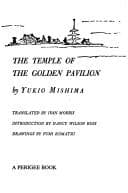
Cover of The Temple of the Golden Pavilion

11.The Temple of the Golden Pavilion

Yukio Mishima · 1956

Based on the true story of a monk who burned down Kinkaku-ji, this novel probes obsession, beauty, and destruction. Mishima examines the dangerous extremes of Japanese aestheticism and the post-war crisis of identity.

Cover of The Sailor Who Fell from Grace with the Sea

12.The Sailor Who Fell from Grace with the Sea

Yukio Mishima · 1963

A taut, disturbing novella about a group of nihilistic boys and their rejection of adult sentimentality. It reflects Mishima's critique of Japan's post-war spiritual emptiness and his fascination with purity and violence.

Cover of No Longer Human

13.No Longer Human

Osamu Dazai · 1948

Dazai's semi-autobiographical masterpiece follows a man who feels fundamentally alienated from society. It remains one of the most widely read novels in Japan and captures the anguish of failing to meet social expectations in a conformist culture.

Cover of The Setting Sun

14.The Setting Sun

Osamu Dazai · 1947

A declining aristocratic family struggles to survive in the upheaval after Japan's defeat in World War II. The novel captures the disorientation of an entire social class losing its identity and purpose.

Cover of Black Rain

15.Black Rain

Masuji Ibuse · 1965

A restrained yet devastating novel about the aftermath of the atomic bombing of Hiroshima, told through diary entries and personal accounts. It reveals how ordinary Japanese people processed unimaginable trauma with quiet resilience.

Cover of The Woman in the Dunes

16.The Woman in the Dunes

Kōbō Abe · 1962

An entomologist becomes trapped in a sand pit with a mysterious woman in this existentialist parable. Abe uses the surreal premise to explore themes of freedom, identity, and the suffocating weight of social duty in Japanese life.

Cover of A Personal Matter

17.A Personal Matter

Kenzaburō Ōe · 1964

A young father must decide what to do when his son is born with a brain abnormality. Nobel laureate Ōe draws on his own life to confront questions of responsibility, escape, and moral courage in post-war Japan.

Cover of Silence

18.Silence

Shūsaku Endō · 1966

A Portuguese Jesuit missionary faces persecution in 17th-century Japan in this profound novel about faith and cultural collision. It illuminates why Christianity struggled in Japan and how Japanese culture absorbs and transforms foreign ideas.

Cover of Kitchen

19.Kitchen

Banana Yoshimoto · 1988

A young woman coping with grief finds solace in cooking and in an unconventional surrogate family. Yoshimoto captures the loneliness and resilience of contemporary urban Japanese youth with a gentle, luminous prose style.

Cover of Norwegian Wood

20.Norwegian Wood

Haruki Murakami · 1987

Murakami's most realistic novel is a nostalgic coming-of-age story set against the student protests of late-1960s Tokyo. It portrays the emotional landscape of young Japanese caught between Western pop culture and traditional expectations.

Cover of The Wind-Up Bird Chronicle

21.The Wind-Up Bird Chronicle

Haruki Murakami · 1994

A sprawling, surreal novel that connects an ordinary man's search for his missing cat to Japan's buried wartime atrocities in Manchuria. Murakami forces a reckoning with historical memory that mainstream Japanese culture often avoids.

Cover of Kafka on the Shore

22.Kafka on the Shore

Haruki Murakami · 2002

Two intertwined narratives blend myth, music, and metaphysics in a journey through modern and mythological Japan. The novel explores the tension between fate and free will through a distinctly Japanese lens of folklore and the supernatural.

Cover of Out

23.Out

Natsuo Kirino · 1997

Four women working the night shift at a Tokyo boxed-lunch factory become entangled in murder. Kirino exposes the invisible labor, economic desperation, and suppressed rage of working-class Japanese women.

Cover of Convenience Store Woman

24.Convenience Store Woman

Sayaka Murata · 2016

A 36-year-old woman finds purpose only as a convenience store worker, defying Japan's rigid expectations of marriage and career advancement. This darkly funny novel dissects social conformity and the pressure to be "normal" in contemporary Japan.

Cover of Breasts and Eggs

25.Breasts and Eggs

Mieko Kawakami · 2020

A bold, multigenerational novel about working-class women in Osaka and Tokyo confronting poverty, body image, and reproductive choice. Kawakami gives voice to experiences that Japanese literature has traditionally left unspoken.

Frequently asked questions

What is the best Japanese book to start with for cultural understanding?
Natsume Sōseki's Kokoro is an excellent starting point. Written in clear, accessible prose, it introduces the central tension between tradition and modernity that defines much of Japanese cultural identity. For contemporary readers, Haruki Murakami's Norwegian Wood offers a more recent entry point into Japanese emotional life.
Do I need to read Japanese books in the original language?
While reading in Japanese offers the deepest cultural immersion, many masterworks are available in outstanding English translations. Translators like Edward Seidensticker, Jay Rubin, and Meredith McKinney have made classical and modern Japanese literature highly accessible to non-Japanese readers.
What cultural concepts will I learn from Japanese literature?
Japanese literature frequently explores mono no aware (the bittersweet awareness of impermanence), giri and ninjō (the conflict between social duty and personal feeling), wabi-sabi (beauty in imperfection), and the tension between tatemae (public facade) and honne (true feelings). These concepts are woven into the fabric of everyday Japanese life.
Are there Japanese books that cover both traditional and modern culture?
Yes. Tanizaki's The Makioka Sisters bridges pre-war tradition and encroaching modernity, while Murakami's The Wind-Up Bird Chronicle connects contemporary life with wartime history. Reading a range of periods, from The Tale of Genji through to Sayaka Murata, will give you the fullest picture of how Japanese culture has evolved.

Read japanese books with AI-powered help

Upload any book page and get sentence-by-sentence translations, grammar notes, and vocabulary building — free.

Start reading for free