🇬🇷

Best Greek Books to Understand Greek Culture

Explore 25 essential Greek books from Homer to modern Nobel laureates that illuminate three millennia of one of civilization's most influential cultures.

Greek literature is the oldest continuous literary tradition in Europe, stretching from Homer's epics in the 8th century BCE to the vibrant novels and poetry of contemporary Athens. No other literature has shaped Western thought so profoundly: democracy, tragedy, philosophy, and the very concept of the individual as a literary subject all emerged from Greek writers grappling with the human condition.

Modern Greek literature carries this legacy forward while addressing distinctly modern concerns: Ottoman occupation, civil war, military dictatorship, economic crisis, and the burden of living in the shadow of an ancient civilization the rest of the world claims as its own. These 25 books span three thousand years and reveal a culture defined by its love of language, its seafaring restlessness, and its fierce attachment to freedom, hospitality, and the pleasures of the table.

25 essential greek books

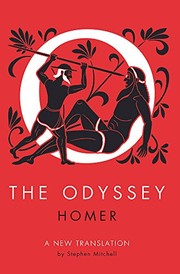
Cover of The Odyssey

1.The Odyssey

Homer · -725

The foundational Western narrative follows Odysseus on his ten-year journey home from Troy, encountering monsters, gods, and the temptation to forget who he is. It established the themes of homecoming, cunning, and hospitality that remain central to Greek identity.
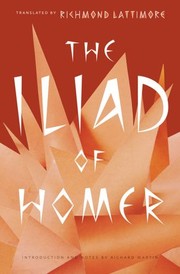

Cover of The Iliad

2.The Iliad

Homer · -750

This epic of the Trojan War explores honor, mortality, and the wrath of Achilles in verse that has defined heroic literature for nearly three millennia. It reveals the Greek obsession with glory, the tragic awareness of human limitation, and the beauty of a doomed world.

Cover of Zorba the Greek

3.Zorba the Greek

Nikos Kazantzakis · 1946

An intellectual narrator is transformed by the irrepressible vitality of Alexis Zorba, a working-class Cretan who dances, fights, and loves without reservation. This novel defined the world's image of Greek joie de vivre and captures the tension between mind and body in Greek culture.

Cover of The Last Temptation of Christ

4.The Last Temptation of Christ

Nikos Kazantzakis · 1955

Kazantzakis reimagines Christ as fully human, tormented by doubt and desire, in a novel that outraged the Orthodox Church but revealed the agonized spirituality at the heart of Greek religious culture. It explores the struggle between flesh and spirit that echoes through Greek thought from Plato to the present.

Cover of Collected Poems

5.Collected Poems

Constantine P. Cavafy · 1935

The Alexandrian poet's spare, ironic verses about desire, loss, and the lessons of history created a new kind of Greek poetry that spoke to the modern condition. Poems like "Ithaka" and "Waiting for the Barbarians" have become part of the global literary vocabulary.

Cover of Collected Poems

6.Collected Poems

George Seferis · 1961

Greece's first Nobel laureate in Literature wove ancient myth into modern experience, writing about exile, landscape, and the weight of history with compressed intensity. His poetry captures how Greeks live simultaneously in the ancient and modern worlds.

Cover of Romiosini

7.Romiosini

Yannis Ritsos · 1954

This long poem celebrating Greek resilience from ancient times through the resistance to Nazi occupation was banned by the military junta and set to music by Mikis Theodorakis. It became an anthem of Greek leftist identity and democratic resistance.

Cover of The Murderess

8.The Murderess

Alexandros Papadiamantis · 1903

An old woman on a Greek island begins killing infant girls to spare them from the suffering she has witnessed women endure, in a novella that exposes the harsh realities of rural Greek life. Papadiamantis, the patron saint of Greek letters, captured the beauty and cruelty of island culture.

Cover of Oresteia

9.Oresteia

Aeschylus · -458

This trilogy about murder and justice in the house of Atreus established the foundations of Western drama and explored how civilized society replaces blood vengeance with the rule of law. It remains the supreme expression of Greek tragic thought about justice, fate, and democratic governance.

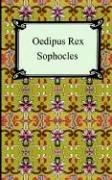
Cover of Oedipus Rex

10.Oedipus Rex

Sophocles · -429

The king of Thebes discovers he has unknowingly killed his father and married his mother, in the play Aristotle considered the perfect tragedy. It embodies the Greek understanding that self-knowledge, however devastating, is the highest human achievement.

Cover of Medea

11.Medea

Euripides · -431

A foreign woman abandoned by Jason takes the most extreme revenge imaginable, in a play that challenged Athenian assumptions about gender, barbarism, and justice. Euripides gave voice to the outsider and the wronged woman in ways that still provoke modern audiences.

Cover of Report to Greco

12.Report to Greco

Nikos Kazantzakis · 1961

Kazantzakis's spiritual autobiography retraces his journey through Crete, Athens, Paris, Russia, and the Holy Land, framing his life as a struggle between flesh and spirit dedicated to the painter El Greco. It is the most passionate account of what it means to be Greek in the modern world.

Cover of The Third Wedding Wreath

13.The Third Wedding Wreath

Costas Taktsis · 1962

Two women narrate their intertwined lives across decades of Greek history, from the Asia Minor catastrophe through World War II to the civil war. This taboo-breaking novel captures the resilience of Greek women and the social mores that constrained them.

Cover of Fool's Gold

14.Fool's Gold

Maro Douka · 1979

A young woman looks back on her involvement in the student resistance against the 1967-1974 military junta, examining the idealism and disillusionment of her generation. It is one of the defining novels about the Polytechnic generation that shaped modern Greek democracy.

Cover of Drifting Cities

15.Drifting Cities

Stratis Tsirkas · 1965

This trilogy follows Greek soldiers and exiles through Jerusalem, Cairo, and Alexandria during World War II, exploring the Greek diaspora's experience and the political divisions that led to civil war. Tsirkas captures the cosmopolitan Greek world beyond the borders of Greece.

Cover of Life in the Tomb

16.Life in the Tomb

Stratis Myrivilis · 1924

Based on the author's experience in the trenches during World War I, this epistolary novel is the Greek equivalent of "All Quiet on the Western Front." It reveals the anti-war sentiment and love of life that characterize the Greek literary response to conflict.

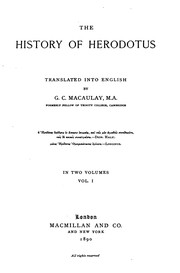
Cover of Histories

17.Histories

Herodotus · -430

The "Father of History" chronicles the Greco-Persian Wars while documenting the customs, beliefs, and geographies of dozens of ancient peoples. This foundational work established the Greek tradition of intellectual curiosity about other cultures that persists today.

Cover of The Republic

18.The Republic

Plato · -375

Plato's dialogue on justice, the ideal state, and the nature of reality is the cornerstone of Western philosophy. It reveals the Greek conviction that rigorous questioning of one's assumptions is the highest form of civic and intellectual life.

Cover of Poems

19.Poems

Odysseas Elytis · 1959

The Nobel Prize-winning poet celebrated the Aegean light, Greek landscape, and sensual beauty with surrealist technique and patriotic fervor. His "Axion Esti" is a modern psalm that fuses Orthodox liturgy with the physical glory of the Greek world.

Cover of Uncle Petros and Goldbach's Conjecture

20.Uncle Petros and Goldbach's Conjecture

Apostolos Doxiadis · 1992

A Greek mathematician sacrifices everything in pursuit of an unsolvable mathematical problem, in a novel that connects modern Greece to its ancient heritage of philosophical and mathematical obsession. It captures the Greek reverence for intellectual pursuit taken to heroic extremes.

Cover of The Colossus of Maroussi

21.The Colossus of Maroussi

Henry Miller · 1941

An American writer's account of traveling through Greece in 1939, encountering a landscape and people that he found more alive than anywhere else on earth. Though written by a foreigner, Greeks themselves consider it one of the truest portraits of their culture's elemental vitality.

Cover of Captain Michalis

22.Captain Michalis

Nikos Kazantzakis · 1953

Set during the 1897 Cretan revolt against Ottoman rule, this novel portrays a Cretan captain whose fierce commitment to freedom costs him everything. It captures the warrior spirit and code of honor that Cretans and many mainland Greeks consider central to their national character.

Cover of Aeolian Earth

23.Aeolian Earth

Ilias Venezis · 1943

A lyrical memoir of childhood in a Greek community on the coast of Asia Minor before the 1922 catastrophe that destroyed it forever. Venezis captures the lost Greek world of Anatolia, whose memory remains a defining wound in modern Greek identity.

Cover of Z

24.Z

Vassilis Vassilikos · 1966

Based on the real assassination of a leftist politician in Thessaloniki, this political thriller exposed the collusion between the Greek state and far-right violence. It was adapted into Costa-Gavras's famous film and remains a landmark of Greek political literature.

Cover of Symposium

25.Symposium

Plato · -385

A group of Athenians at a dinner party deliver speeches about the nature of love, culminating in Socrates' account of love as the pursuit of beauty and truth. This dialogue reveals the Greek belief that conversation, wine, and philosophical inquiry are inseparable pleasures.

Frequently asked questions

Should I start with ancient or modern Greek literature?
Both are rewarding entry points. If you want to understand the foundations of Western thought, start with Homer's Odyssey or Sophocles' Oedipus Rex. If you want to understand contemporary Greece, Zorba the Greek by Kazantzakis or Cavafy's poems offer a more immediate connection to modern Greek life.
How different is ancient Greek from modern Greek?
Ancient and modern Greek are related but distinct. A modern Greek speaker can recognize many words in ancient texts but would struggle to read Homer without training, much as an English speaker would with Beowulf. However, the cultural continuity is remarkable, and modern Greek literature constantly references its ancient heritage.
What makes Greek literature unique compared to other European traditions?
Greek literature bears the unique burden and privilege of being the origin point of Western literature itself. Modern Greek writers must navigate an overwhelming ancient legacy while addressing modern realities like Ottoman occupation, civil war, and economic crisis. This tension between past glory and present struggle gives Greek literature its distinctive character.
Are there Greek books that capture everyday Greek culture and social life?
Absolutely. Papadiamantis's stories capture island life, Kazantzakis's Zorba embodies Cretan vitality, and Cavafy's poems distill the pleasures and regrets of daily existence. For a foreign perspective that Greeks themselves love, Henry Miller's The Colossus of Maroussi celebrates the warmth, hospitality, and spirited conversation that define Greek social culture.

Read greek books with AI-powered help

Upload any book page and get sentence-by-sentence translations, grammar notes, and vocabulary building — free.

Start reading for free