🇮🇳

Best Hindi Books to Understand Indian Culture

Discover 25 essential books from Hindi and Indian literature that reveal the soul of one of the world's oldest and most diverse civilizations.

Hindi literature draws from a civilization more than five thousand years old, weaving together sacred epics, Bhakti devotional poetry, Mughal-era storytelling, and unflinching modern realism. From the villages of the Gangetic plain to the megacities of Mumbai and Delhi, Hindi-language writers have chronicled caste oppression, partition trauma, gender struggles, and the spiritual quests that define Indian life.

This list blends Hindi-language classics by masters like Premchand and Dharamvir Bharati with influential English-language works by Indian authors whose novels have shaped how the world understands India. Together, these 25 books offer a rich, layered portrait of a culture defined by its extraordinary diversity, philosophical depth, and the constant dialogue between tradition and change.

25 essential hindi books

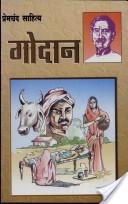
Cover of Godan

1.Godan

Munshi Premchand · 1936

Premchand's masterpiece follows a poor farmer's lifelong dream of owning a cow, exposing the crushing weight of caste, debt, and landlord exploitation in rural India. It remains the most important Hindi novel for understanding the agrarian society that still shapes much of Indian life.
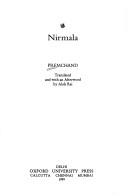
Cover of Nirmala

2.Nirmala

Munshi Premchand · 1928

A young woman is married to a much older widower because her family cannot afford a proper dowry, setting off a chain of jealousy and tragedy. This novel lays bare the dowry system and the limited agency of women in early 20th-century Indian society.

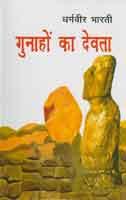
Cover of Gunahon Ka Devta

3.Gunahon Ka Devta

Dharamvir Bharati · 1949

A sweeping love story set against the Indian independence movement, exploring the idealism and disillusionment of a generation that fought for freedom only to face a complex new reality. It captures the emotional landscape of post-independence India with poetic intensity.

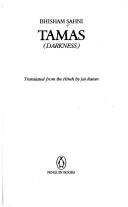
Cover of Tamas

4.Tamas

Bhisham Sahni · 1974

Set during the 1947 Partition, this novel portrays the communal violence between Hindus, Muslims, and Sikhs through the eyes of ordinary people caught in the madness. It is the definitive Hindi-language account of Partition's human cost and remains painfully relevant.

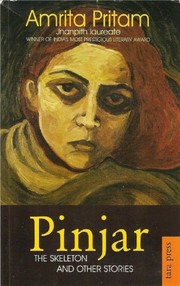
Cover of Pinjar

5.Pinjar

Amrita Pritam · 1950

A Hindu woman is abducted by a Muslim man during Partition, and the novel traces her journey through loss, survival, and unexpected compassion. Pritam, the first major Punjabi woman writer, created a landmark work about how women's bodies became battlegrounds during communal violence.

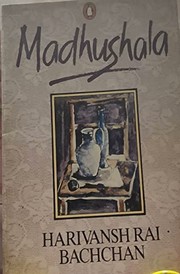
Cover of Madhushala

6.Madhushala

Harivansh Rai Bachchan · 1935

This beloved Hindi poem uses the metaphor of a tavern to explore life, death, and the search for meaning, drawing on both Sufi and Hindu mystical traditions. It is one of the most recited works in Hindi and captures the philosophical spirituality central to Indian culture.

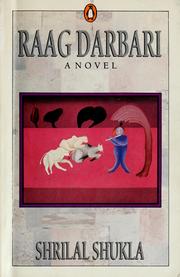
Cover of Raag Darbari

7.Raag Darbari

Shrilal Shukla · 1968

A biting satire of post-independence rural India, following a young man who returns to his uncle's village to find corruption, caste politics, and absurdity at every level of governance. It won the Sahitya Akademi Award and remains the sharpest critique of Indian village power structures.

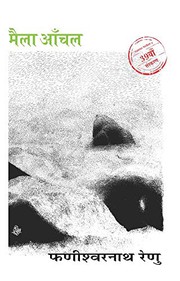
Cover of Maila Anchal

8.Maila Anchal

Phanishwar Nath Renu · 1954

Set in a malaria-ridden village in Bihar, this novel presents the textures of rural Indian life with ethnographic richness, from folk songs to caste dynamics to political awakening. It pioneered the Anchalik (regional) novel tradition that grounded Hindi literature in local specificity.

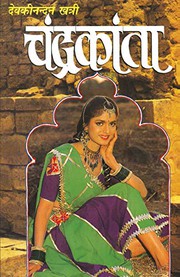
Cover of Chandrakanta

9.Chandrakanta

Devaki Nandan Khatri · 1888

This fantasy romance about a princess and the prince who loves her, set among warring kingdoms with magical elements, is credited with popularizing Hindi prose fiction. It reflects the storytelling traditions of pre-modern India and helped establish Hindi as a modern literary language.

Cover of Chitralekha

10.Chitralekha

Bhagwati Charan Verma · 1934

A philosophical novel set in ancient India that asks whether sin resides in the ascetic or the pleasure-seeker, exploring the tension between renunciation and worldliness. It engages with the fundamental spiritual questions that have shaped Indian thought for millennia.

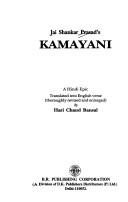
Cover of Kamayani

11.Kamayani

Jaishankar Prasad · 1936

This epic Hindi poem reimagines the Vedic flood myth to explore the faculties of mind, emotion, and will through allegorical characters. It is considered the finest achievement of the Chhayavaad romantic movement and reflects India's deep engagement with philosophical poetry.

Cover of Yama

12.Yama

Mahadevi Varma · 1940

A collection of sketches portraying the lives of women from various social strata, each facing suffering with quiet resilience. Varma, one of the four pillars of Chhayavaad poetry, illuminates the invisible struggles of Indian women with compassion and literary grace.

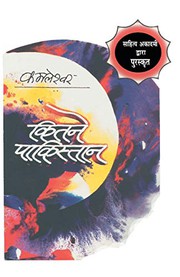
Cover of Kitne Pakistan

13.Kitne Pakistan

Kamleshwar · 2000

This experimental novel puts the concept of Partition itself on trial, spanning centuries of Indian history to argue that division along religious lines is a recurring human failure. It won the Sahitya Akademi Award and offers a sweeping meditation on communalism in South Asian culture.

Cover of The Guide

14.The Guide

R.K. Narayan · 1958

A con man in a fictional South Indian town accidentally becomes a holy man, exploring the thin line between fraud and faith in Indian society. Narayan's gentle irony and the invented town of Malgudi have given the world its most accessible portrait of everyday Indian life.

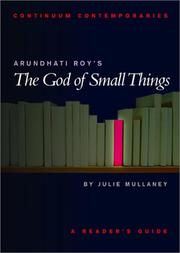
Cover of The God of Small Things

15.The God of Small Things

Arundhati Roy · 1997

Set in Kerala, this Booker Prize winner traces how caste rules and family tyranny destroy two children's lives, exposing the "Love Laws" that dictate who may be loved and how much. It brought international attention to the enduring brutality of India's caste system.

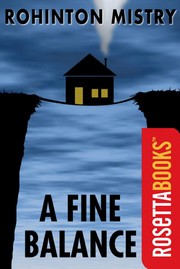
Cover of A Fine Balance

16.A Fine Balance

Rohinton Mistry · 1995

Four strangers share a Bombay apartment during the Emergency of 1975, and their intertwined fates reveal the fragility of dignity in the face of state power and caste violence. It is one of the most devastating fictional accounts of modern India's urban poor.

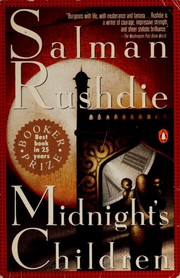
Cover of Midnight's Children

17.Midnight's Children

Salman Rushdie · 1981

Children born at the exact moment of India's independence possess magical powers in this Booker of Bookers winner that reimagines Indian history as fantastical epic. It captures the chaotic, contradictory energy of modern India through a narrative style indebted to Indian oral traditions.

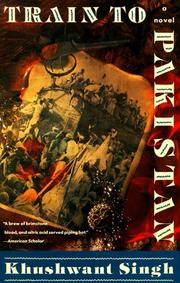
Cover of Train to Pakistan

18.Train to Pakistan

Khushwant Singh · 1956

A small border village where Hindus, Muslims, and Sikhs have lived in peace for generations is torn apart by the violence of Partition. Singh's spare, journalistic prose makes this one of the most immediate and human accounts of 1947.

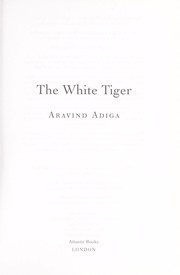
Cover of The White Tiger

19.The White Tiger

Aravind Adiga · 2008

A village boy turned entrepreneur narrates his escape from India's servant class through murder and cunning, exposing the "Rooster Coop" of caste and class that keeps hundreds of millions trapped. This Booker winner captures the ruthless energy of India's economic transformation.

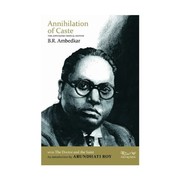
Cover of Annihilation of Caste

20.Annihilation of Caste

B.R. Ambedkar · 1936

This undelivered speech by the architect of India's constitution is the most powerful intellectual assault on the caste system ever written. It is essential for understanding the social hierarchy that remains the defining feature of Indian society.

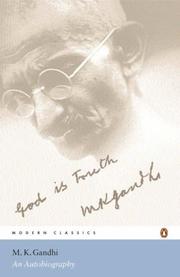
Cover of My Experiments with Truth

21.My Experiments with Truth

Mahatma Gandhi · 1927

Gandhi's autobiography traces his evolution from a shy law student to the leader of India's independence movement, revealing the spiritual and moral philosophy behind nonviolent resistance. It is indispensable for understanding the ethical framework that shaped modern India.

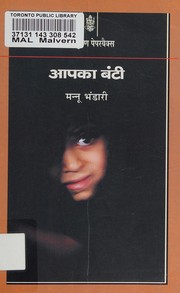
Cover of Aapka Bunti

22.Aapka Bunti

Mannu Bhandari · 1971

A child navigates the emotional devastation of his parents' divorce in this pioneering Hindi novel about the middle-class Indian family under strain. Bhandari broke new ground by centering a child's psychological experience within the pressures of modern Indian domesticity.

Cover of Tyagpatra

23.Tyagpatra

Jainendra Kumar · 1937

A woman abandoned by her family for defying social convention tells her story in letters, challenging the moral certainties of Hindu society. This psychologically complex novel was among the first in Hindi to privilege individual consciousness over social realism.

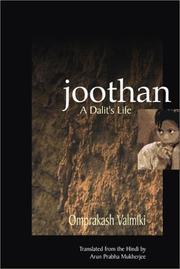
Cover of Joothan

24.Joothan

Omprakash Valmiki · 1997

This searing autobiography recounts growing up as an "untouchable" in a North Indian village, enduring daily humiliations from eating leftover scraps to being forced to clean upper-caste homes. It is the foundational text of Dalit literature and essential for understanding caste oppression from below.

Cover of Rashmirathi

25.Rashmirathi

Ramdhari Singh Dinkar · 1952

This epic poem retells the Mahabharata from the perspective of Karna, the warrior rejected for his low birth despite his extraordinary abilities. Dinkar uses the ancient epic to critique caste discrimination, connecting India's mythological past to its modern social struggles.

Frequently asked questions

What is the best Hindi book for someone new to Indian culture?
Godan by Premchand is the ideal starting point for Hindi literature, offering a deeply human portrait of rural India. If you prefer reading in English, The God of Small Things by Arundhati Roy or The Guide by R.K. Narayan provide excellent cultural immersion.
Why does this list include English-language Indian authors?
India's literary culture is multilingual. Authors like R.K. Narayan, Arundhati Roy, and Salman Rushdie write in English but draw deeply from Hindi-belt and broader Indian cultural traditions. Their works are essential for understanding the same society and values explored by Hindi-language writers.
What themes are most important in Hindi literature?
Caste and social hierarchy, the trauma of Partition, rural versus urban life, gender oppression, spiritual seeking, and the tension between tradition and modernity are the defining themes. The caste system in particular pervades Hindi literature in ways that are essential to understanding Indian society.
How does reading Hindi literature help with learning the Hindi language?
Hindi literature is rich in idiomatic expressions, proverbs, and cultural references that textbooks cannot teach. Reading Premchand or Bachchan exposes learners to the rhythms and registers of real Hindi, from rural dialects to urban colloquial speech, building cultural fluency alongside linguistic skill.

Read hindi books with AI-powered help

Upload any book page and get sentence-by-sentence translations, grammar notes, and vocabulary building — free.

Start reading for free